Thứ Tư, 1 tháng 5, 2013

Traveller deals - Sydney Morning Herald

‘; var fr = document.getElementById(adID); setHash(fr, hash); fr.body = body; var doc = getFrameDocument(fr); doc.open(); doc.write(body); setTimeout(function() {closeDoc(getFrameDocument(document.getElementById(adID)))}, 2000); } function renderJIFAdWithInterim(holderID, adID, srcUrl, width, height, hash, bodyAttributes) { setHash(document.getElementById(holderID), hash); document.dcdAdsR.push(adID); document.write(”); } function renderIJAd(holderID, adID, srcUrl, hash) { document.dcdAdsAA.push(holderID); setHash(document.getElementById(holderID), hash); document.write(” + ‘ript’); } function renderJAd(holderID, adID, srcUrl, hash) { document.dcdAdsAA.push(holderID); setHash(document.getElementById(holderID), hash); document.dcdAdsH.push(holderID); document.dcdAdsI.push(adID); document.dcdAdsU.push(srcUrl); } function er_showAd() { var regex = new RegExp(“externalReferrer=(.*?)(; |$)”, “gi”); var value = regex.exec(document.cookie); if (value value.length == 3) { var externalReferrer = value[1]; return (!FD.isInternalReferrer() || ((externalReferrer) (externalReferrer 0))); } return false; } function isHome() { var loc = “” + window.location; loc = loc.replace(“//”, “”); var tokens = loc.split(“/”); if (tokens.length == 1) { return true; } else if (tokens.length == 2) { if (tokens[1].trim().length == 0) { return true; } } return false; } function checkAds(checkStrings) { var cs = checkStrings.split(“,”); for (var i=0;i 0 cAd.innerHTML.indexOf(c)0) { document.dcdAdsAI.push(cAd.hash); cAd.style.display =’none’; } } } if (!ie) { for (var i=0;i 0 doc.body.innerHTML.indexOf(c)0) { document.dcdAdsAI.push(fr.hash); fr.style.display =’none’; } } } } } if (document.dcdAdsAI.length 0 || document.dcdAdsAG.length 0) { var pingServerParams = “i=”; var sep = “”; for (var i=0;i 0) { var pingServerUrl = “/action/pingServerAction?” + document.pingServerAdParams; var xmlHttp = null; try { xmlHttp = new XMLHttpRequest(); } catch(e) { try { xmlHttp = new ActiveXObject(“Microsoft.XMLHttp”); } catch(e) { xmlHttp = null; } } if (xmlHttp != null) { xmlHttp.open( “GET”, pingServerUrl, true); xmlHttp.send( null ); } } } function initAds(log) { for (var i=0;i 0) { doc.removeChild(doc.childNodes[0]); } doc.open(); var newBody = fr.body; if (getCurrentOrd(newBody) != “” ) { newBody = newBody.replace(“;ord=”+getCurrentOrd(newBody), “;ord=” + Math.floor(100000000*Math.random())); } else { newBody = newBody.replace(“;ord=”, “;ord=” + Math.floor(100000000*Math.random())); } doc.write(newBody); document.dcdsAdsToClose.push(fr.id); } } else { var newSrc = fr.src; if (getCurrentOrd(newSrc) != “” ) { newSrc = newSrc.replace(“;ord=”+getCurrentOrd(newSrc), “;ord=” + Math.floor(100000000*Math.random())); } else { newSrc = newSrc.replace(“;ord=”, “;ord=” + Math.floor(100000000*Math.random())); } fr.src = newSrc; } } } if (document.dcdsAdsToClose.length 0) { setTimeout(function() {closeOpenDocuments(document.dcdsAdsToClose)}, 500); } } }; var ie = isIE(); if(ie typeof String.prototype.trim !== ‘function’) { String.prototype.trim = function() { return this.replace(/^s+|s+$/g, ”); }; } document.dcdAdsH = new Array(); document.dcdAdsI = new Array(); document.dcdAdsU = new Array(); document.dcdAdsR = new Array(); document.dcdAdsEH = new Array(); document.dcdAdsE = new Array(); document.dcdAdsEC = new Array(); document.dcdAdsAA = new Array(); document.dcdAdsAI = new Array(); document.dcdAdsAG = new Array(); document.dcdAdsToClose = new Array(); document.igCount = 0; document.tCount = 0; var dcOrd = Math.floor(100000000*Math.random()); document.dcAdsCParams = “”; var savValue = getAdCookie(“sav”); if (savValue != null savValue.length 2) { document.dcAdsCParams = savValue + “;”; }


Travel


Date


April 27, 2013


  • (1)


Airports and Hotels in Emerging Markets Outpace the West


Dubai, an emirate with global ambitions to diversify, expanded its airport recently with a new terminal paved with white marble, devoted to its growing fleet of Airbus A380s double-deckers. Similarly, Beijing and Shanghai greet foreign travelers with gleaming and spacious new international terminals.


Istanbul, ancient capital of empires, is successfully refashioning itself as a modern transportation hub with better connections to Asia than rivals in the United States or Europe. And Brazil, a rising oil power, is pouring billions into infrastructure as it prepares to host the soccer World Cup next year and the Olympic Games in 2016.


Business travelers are expected to spend about $1.16 trillion on airfare, accommodations and other travel this year, according to the Global Business Travel Association, up from $1.07 trillion last year. Much of that growth is coming from developing nations, prompting a boom in new construction in emerging markets while business travel in the United States recovers at a slow pace and Europe, mired in the euro crisis, remains stagnant.


“What we’ve seen in terms of infrastructure in recent years recalls the old baseball adage — if you build it, they will come,” said Tony Davis, a partner at Irelandia Aviation, an investor in low-cost airlines like VivaAerobus in Mexico and Tiger Airways in Singapore.


The growth in passenger travel tells the story. Global traffic rose 4 percent last year, according to the Airports Council International, a trade group that represents more than 1,700 airports in 170 countries. In North America and Europe, airports had only modest gains. But air transportation in emerging economies has been buoyant — a testament to their dynamism and growth prospects in time of low interest rates, and their opportunities in raw materials, commodities and trade.


Traffic last year grew by 7.5 percent in Asia, 7.3 percent in Latin America, 6.4 percent in Africa and 13 percent in the Middle East, according to the airport trade group, outpacing Western airports by a wide margin. Five airports in emerging markets, each with more than 40 million annual passengers, reported double-digit growth — Istanbul, Dubai, Jakarta, Bangkok and Singapore — according to a report released last month by the airport group.


Atlanta, currently home to the world’s busiest airport, grew 3.3 percent. Chicago O’Hare International Airport, the second-busiest in the United States, actually shrank slightly, according to the report.


Nowhere has the growth in business travel been more robust and prolonged than in China. Passengers at Beijing Capital International Airport tripled in the last decade, and most travel experts expect that it will jump ahead of Atlanta’s Hartsfield-Jackson International Airport as the world’s top airport by passenger traffic next year.


China’s business travel spending has grown an average of 15.5 percent each year from 2000 to 2013 and is set to reach $226 billion this year, according to the Global Business Travel Association. Remarkably, that figure is growing even as China’s export-led economy begins to slow and make the transition to a consumer-oriented one.


Chinese business travel is forecast to increase nearly 17 percent next year, and China is set to overtake the United States as the world’s top business travel market by then.


Shanghai built a new terminal at the Hongqiao International Airport as part of a $9 billion investment program that also included a transportation hub linking the airport to city buses, subways and a new high-speed rail network. The airport, which opened three years ago and can handle 300,000 flights a year, has high-end shops like Armani and chains like Starbucks.


To cater to China’s rising middle class and fulfill the leadership’s desire to reduce the economy’s reliance on exports, businesses will need a better travel infrastructure across the vast Chinese interior. To that end, the Chinese government has outlined plans to build another 100 airports throughout the country over the next couple of years.


“You really have a changing landscape throughout the developing economies,” said Michael W. McCormick, the executive director of the Global Business Traveler Association, a group whose members include corporate travel managers. “The infrastructure is clearly racing to catch up with demand.”


Airports and Hotels in Emerging Markets Outpace the West

Deals agreed: Mourinho & Falcao are Chelsea-bound

By Wayne Veysey | Chief Correspondent


Jose Mourinho has agreed a deal to re-join Chelsea as their manager this summer – and is poised to bring £50 million striker Radamel Falcao with him.


Goal.com understands that the Real Madrid boss is expected to be unveiled in the Stamford Bridge hot seat at the end of the season following a breakthrough in negotiations with the club over the last week.


The Chelsea high command, led by Roman Abramovich, have been in talks with Mourinho’s camp for months about a sensational return for the man who led the club to two Premier League titles during his first spell in charge from 2004-2007.


Negotiations have centred on how much control Mourinho will have in recruiting players and staff, as well as his place in a management structure where low-profile technical director Michael Emenalo holds the levers of power.


It is believed that, following a series of twists and turns during discussions, an agreement in principle has been reached for the Portuguese to take over from interim manager Rafael Benitez this summer.


Mourinho is expected to put pen to paper and formalise the deal when he ends his three-year spell in Madrid at the end of next month.


A report in Germany last week claimed that Chelsea were on the brink of landing both Mourinho and Atletico Madrid’s spearhead Falcao.


Goal.com understands that the European champions have since made further progress with both deals and are confident that Mourinho will announce the prolific Colombian, who is also represented by super agent Jorge Mendes, as one of his first signings.


Chelsea, who came close to landing Falcao last August and then again in January, have been in talks with Atletico top brass for weeks about the structure of a deal which is complicated by uncertainty over the future of goalkeeper Thibaut Courtois, who has been extremely impressive since joining the Spanish club on loan at the start of last season.


Chelsea are prepared to allow the Belgian keeper to continue his development by staying in Madrid for another season if it eases Falcao’s path to west London.


The Blues have made it clear that they are willing to activate the £50.8m release clause in the striker’s Atletico contract.


The deal is a complex one because of third-party ownership issues – with Mendes part of a consortium holding an interest in Falcao – but Chelsea have intensified their efforts to land the front man in a bid to ensure the transfer can be completed.


The London club have made Falcao a contract offer and it is believed that personal terms have already been agreed on a deal that is likely to make the striker one of the highest paid players in Premier League history.


Goal.com exclusively revealed in March that the former Porto man is chasing a deal worth around £250,000 per week.


Mourinho and senior Chelsea officials regard the Colombian, who has scored 32 goals in 36 games for Atletico this season, as an upgrade on current front men Fernando Torres and Demba Ba.


Falcao has the pedigree and star quality which Chelsea thought they had acquired with the £50m purchase of Torres in January 2010, but the Spaniard is now likely to be put up for sale to help fund the purchase of the player earmarked to be his replacement.


Follow Wayne Veysey on


Deals agreed: Mourinho & Falcao are Chelsea-bound

Away from home: Mastering industry-academia links

Every Wednesday, our ‘Away from home’ blog series features one Indian postdoc working in a foreign lab recounting his/her experience of working there, the triumphs and challenges, the cultural differences, what they miss about India, as well as some top tips for postdocs headed abroad. You can join in the online conversation using the #postdochat hashtag.


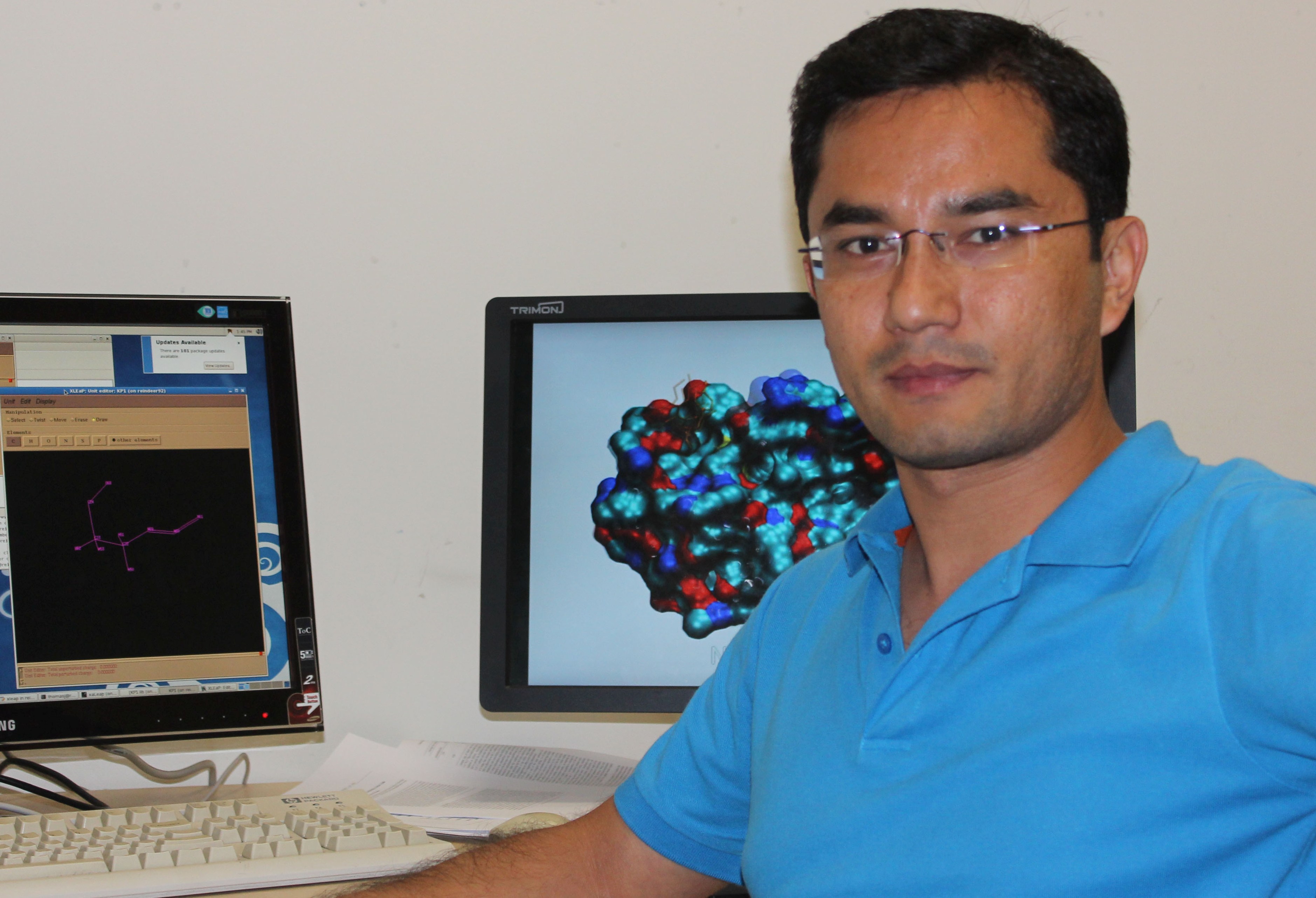
Today we have Dilraj Lama, a PhD from the Indian Institute of Technology, Kanpur and a postdoctoral research fellow at the Bioinformatics Institute, A*STAR, Singapore. Dilraj is having a great time with biological modelling and simulation experiments as he seamlessly blends in with the local community owing to similar facial features. Exposed to a healthy multi-disciplinary work team, he is also learning important lessons in industry-academia linkages early on in his research life.


4f71d DL 1024x698 Netizen Report: Israel Asserts Right to Search Email


Dilraj Lama


Switching between sciences


Learning has always been like a journey for me. I opted for mathematics over biology as my major during schooling, went for engineering thereafter, and guess what? I did a PhD in biological sciences! So it has never been a conscious effort on my part to be in any particular area. Looking back, I was always a bit curious and that might have driven me towards a carrier in science.


Molecular modelling


After completing a PhD from the Indian Institute of Technology, Kanpur, I was looking for an appropriate laboratory for postdoctoral training and Dr. Chandra Verma’s work at the Bioinformatics Institute, A*STAR, Singapore, caught my attention. He uses a computational approach corroborated with extensive experimental collaboration to address biological problems and he has made significant scientific contributions over the years. I was very keen to join him and today I work as a postdoctoral researcher with him.


My primary focus is designing and modelling of peptide-based inhibitors against biomolecular targets whose malfunctioning gives rise to pathological conditions. I use the computational approach mostly involving molecular modelling and simulation for my research. The work is done in extensive collaboration with an experimental group which complements our approach and validates the designed models. We are working towards developing high-affinity inhibitors which are biologically active and hence will have the potential to expand into drug molecules.


Multi-discipline potpourri


We have people working in different areas which provides an excellent opportunity to broaden my scientific skills. The work culture in the group is very positive. Besides, we also get to interact extensively with other scientific groups, meet eminent scientists, organise talks and events, all of which are an integral part of postdoctoral training.


Singapore is very close to home which is very comforting. It has an exceptional infrastructure, cleanliness, warm people, boundless cuisines, great tourist destinations and is a prime location to explore South-East Asia. I am also told that it is the sixth least corrupt nation in the world. Now, how cool is that!


Making the switch


It was a very smooth transition for me, primarily because of the people I came in contact with during the initial days. There have been several interesting incidents but one of them stands out. I come from the north-eastern part of India where the physical features of people are similar to Singapore locals. During my search for an apartment with an Indian agent (who looked more Indian to the locals), the owner asked me for my badge mistaking me for the agent and him for the prospective tenant. It was hilarious and we had a hearty laugh when the matter was clarified.


Singapore is overall a great place to be. Yes, it is not perfect. Naturally there are issues at hand.  But I believe it’s all about how you deal with it and make it work for you.


Successful industry-academia linkages


One of the things that post-doctoral researchers can learn from training in Singapore is the intricate worki culture between industry and academia. It is a very nice place for collaborative research since one of the prime conditions for funding here is that the work has to be cooperative in nature. It will also be an attractive destination for people who are interested in product development also known as applied science.


Home is where the heart is


Home is where the heart is, they say. I stand by that and nothing can substitute the feeling of being in close company of your near and dear ones. I do look forward for an opportunity to come back and work in India.


Dilraj Lama gets us the first flag post from Singapore (in fact, from the whole of Asia!) in our interactive Away from home map. Find him and 20 other Indian postdocs from around the world in the map updated every Wednesday (a snapshot showing Dilraj Lama’s flag below). Please feel free to suggest names of postdocs from countries and disciplines we haven’t covered yet.


0a775 AFH map update16 Netizen Report: Israel Asserts Right to Search Email


Away from home: Mastering industry-academia links

Average tourist spends 1.5 million won

Over 50 percent of the tourists visiting Jeju on package tours spend an average of around 1.5 million won on shopping during their stay.


The Jeju Tourism Organization of the Jeju Special Self-Governing Province announced the results of a survey analyzing the habits of foreign tourists in 2012. The research was conducted in part with the Industry-Academic Cooperation of Jeju National University.


According to this survey, of the 51.9 percent of foreign tourists who visited Jeju through tour packages, 31.1 percent were individual travelers, and 16.9 percent traveled with Airtel. Tourists from Taiwan, China, Vietnam, and Japan represented the majority of tourists who came to Jeju on package tours, while tourists from Southeast Asia, including Singapore, Indonesia, and Malaysia preferred independent travel.


While the mean spending of foreign tourists was 1.49 million won per person in 2012, Chinese tourists spent a much higher 2.15 million won per person, those from Japan averaged 1.88 million won, and those from Hong Kong spent 1.87 million won per person last year.


Broken down by purchased products, foreign tourists in Jeju spent 29.7 percent of their money on groceries, 24.5 percent on cosmetics, 13.4 percent on clothing, and 11.9 percent on health foods.


Average tourist spends 1.5 million won

Netizen Report: Israel Asserts Right to Search Email

aecf9 Screen shot 2013 04 30 at 12.11.33 PM


Israel – Lebanon border, Rosh Hanikra. Photo by campsmum. (CC BY 2.0)


Most of this report was researched, written, and edited by Lisa Ferguson, Weiping Li, Alex Laverty, Chan Myae Khine, Ellery Roberts Biddle, Renata Avila, Hisham Almiraat, and Sarah Myers.


Global Voices Advocacy’s Netizen Report offers an international snapshot of challenges, victories, and emerging trends in Internet rights around the world. This week we focus on a new set of surveillance issues in Israel and the United States, as well as challenges to online activists in Singapore, Turkey, and Malaysia.


Surveillance


Israel’s Attorney General affirmed that Israel’s Security Agency can legally demand to search of the contents of foreigners’ email accounts if they wish to enter Israel. The Association for Civil Rights in Israel petitioned the Justice Ministry to overrule the policy after a Palestinian-American woman was denied entry into the country last year for refusing to comply with a search request. The Attorney General’s office said that the policy will only be applied when “suspicious or pertinent information has been identified.” While travellers are not expected to give up their passwords, those who refuse to allow security officials access to their email may be denied entry to the country.


The Nigerian government awarded a US$40 million contract to Israel-based Elbit Systems that will allow authorities to monitor computers and email correspondence within the country, according to Premium Times Nigeria.


According to documents received by the Electronic Privacy Information Center, Obama administration officials secretly authorized the interception of Internet communications by the US National Security Agency and the Department of Defense as part of a military-run cybersecurity pilot project aimed at protecting critical infrastructure.


A judge in the US state of Texas denied a request by the Federal Bureau of Investigation to install spyware on a computer to track a suspect in a bank fraud and identity theft case. According to Slate, the judge called the tactic “extremely intrusive” and refused to approve it because the FBI “did not know the location or identity of the suspect and could not guarantee the spy software would not end up targeting innocents.”


Thuggery


Singaporean cartoonist Leslie Chew was arrested in response to a complaint filed against him for publishing a satirical comic on his Facebook page, “Demon-cratic Singapore,” that accused the Singaporean government of racism and discrimination against the country’s Malay minority. Chew was released on a bail of over US$8,000. If convicted under Singapore’s Sedition Act, he could face up to three years in prison and/or a hefty fine.


With general elections approaching, independent news websites in Malaysia including Harakah Daily and Malaysiakini reported that DDoS attacks have left their sites difficult to access through certain ISPs. Malaysiakini CEO Premesh Chandran called on ISPs to “stay out of politics” and “ensure shared gateways are free of tampering and restrictions.”


Privacy


Changes to EU data regulations could weaken provisions that protect online privacy. A group of consumer rights groups, including the Open Rights Group, Privacy International, Digital Gesellschaft, Access, and La Quadrature du Net have launched a “Naked Citizens” campaign opposing the changes, claiming the amendments “are an effort to strip EU citizens naked by making it almost impossible for them to control who sees their personal information and even how it is used.”


National Policy


ICT policymakers in East Africa are considering new ways to lower broadband costs for the region. Kenya has not build a broadband cable connection with Tanzania, largely due to competition between the countries; both wish to be the primary provider of fiber in the region. Others have argued that creating an Internet Exchange point may be the key to lowering broadband costs for East Africa.


Iceland’s Supreme Court decided on April 24 to fine Valitor, a subcontractor of Visa ISK, US$6,830 per day for blocking DataCell, the processor for WikiLeaks’ donations, from their payment processes.


Copyright


Swedish authorities arrested an administrator for Sweden’s second most popular torrent site, Tankafetast, another in a series of police raids on torrenting sites in the country.


Finnish websites went dark on April 23 to promote a new Citizen’s Initiative Act, which would require Parliament to process bills proposed by the public that obtain 50,000 signatures of support. The bill currently has just over 27,000 signatures.


The European Parliament adopted a resolution on a proposed EU-US trade agreement, the Trans-Atlantic Free Trade Agreement. The resolution encourages the inclusion of copyright, patent, and trademarks. Many civil society groups oppose the inclusion of intellectual property and patent provisions in the agreement.


Sovereigns of Cyberspace


Advocates in the United Kingdom accused Facebook of political censorship after a post promoting the privatization of the UK health system was taken down. Written by Kerry-Anne Mendoza, the post chronicled the story of a cancer patient navigating the country’s healthcare system, but was taken down after receiving over 1,000 shares.


Google released a new Transparency Report, illustrating a sharp increase in the number of content removal requests it received from July-December 2012. Large quantities of requests came from Brazil, the US and Russia. Google received requests from 20 countries concerning posts of the controversial film “Innocence of Muslims”.


Cybersecurity


The “Syrian Electronic Army,” a group alleged to have close ties to the Syrian government, took credit for a hacking attack on the Associated Press’ Twitter account. Attackers posted a false report that explosions had occurred at the White House and injured US President Barack Obama. The news agency’s accounts were suspended temporarily following the attack and White House Press Secretary Jay Carney issued a statement affirming that the report was indeed false.


In response to the hack, Twitter is now testing a two-step authentication feature that would increase platform security.


The self-proclaimed leader of LulzSec was arrested by Australian police this week. The Australian citizen is part of the group that took down the American Central Intelligence Agency website in 2011 and other Australian government websites more recently.


BadNews, a “malicious ad network library,” has widely infiltrated Google Play and has reportedly been operating for at least 10 months. The malware has been downloaded up to 9 million times, according to security researchers. The apps connect to a rogue server every four hours and report information including the device phone number as well as its unique serial number.


Cool Things


A new version of the Ubuntu operating system has launched. A review of the new operating system is available here.


Wolfram Alpha conducted research on Facebook user statistics using a free report feature on its computational search engine. The New York Times conducted an analysis of the aggregate findings.


A site similar to Reddit and directed at African Internet users launched this week. Called MyAfrika, it uses a similar format and interface, allowing users to ‘up’ or ‘ignore’ news and questions.


Publications and Studies


Subscribe to the Netizen Report by email


For upcoming events related to the future of citizen rights in the digital age, see the Global Voices Events Calendar.


Netizen Report: Israel Asserts Right to Search Email

Set up your own business to survive and thrive in China


Some believe that while international firms are still keen to utilise the

experience of expats, there is a sort-of unspoken ‘deal’ that expats come

and work in China for a few years, benefit career-wise and financially, and

then leave.


“In my experience working for state-owned Chinese media companies, there was a

definite iron ceiling,” said journalist Jo McDermott, who recently returned

to London from Shanghai. “In four years, I encountered one occasion when a

foreigner made it to senior editor level and he didn’t last long.”


So there is every incentive for Britons who want to survive and thrive in

China and Singapore to seek to set up their own businesses and take control

of their own destiny.


A little local knowledge – and local contacts – can certainly help. Expat

Stephen Notman runs the Whisky

Live
tasting and sampling festival in Shanghai and is based in

Mansfield. “I have somewhat been fortunate with having a business partner

who understands the dialect,” he said.


“For young entrepreneurs, it is important to remember that you are not playing

on home soil. A balanced business with a local partner who you trust, who

can help you open doors, is essential. Combine this with Western creativity

and innovation and you have a perfect combination.”


Mr Carter agrees. “It’s true to say that the language barrier is the key

reason some expats struggle in an international firm. Night school Mandarin

isn’t enough – you have to be fluent,” he said.


That’s not to say permanent positions with big companies aren’t an option at

all for Brits looking East. Philip Griffin, CEO of Jinan Griffin Imports and

Exports, says he and many of his expat friends are still in demand by

international firms, particularly in smaller towns.


“I would not really agree that the Chinese are forcing Westerners out of jobs

or to smaller cities – it really depends on the business you are doing,” he

said. “I am 65 and have been in this trade since I was 16 – this experience

cannot be replaced by Chinese students or newly qualified workers.”


Set up your own business to survive and thrive in China